
Rethinking the assumptions we make about young people who aren’t “following through”
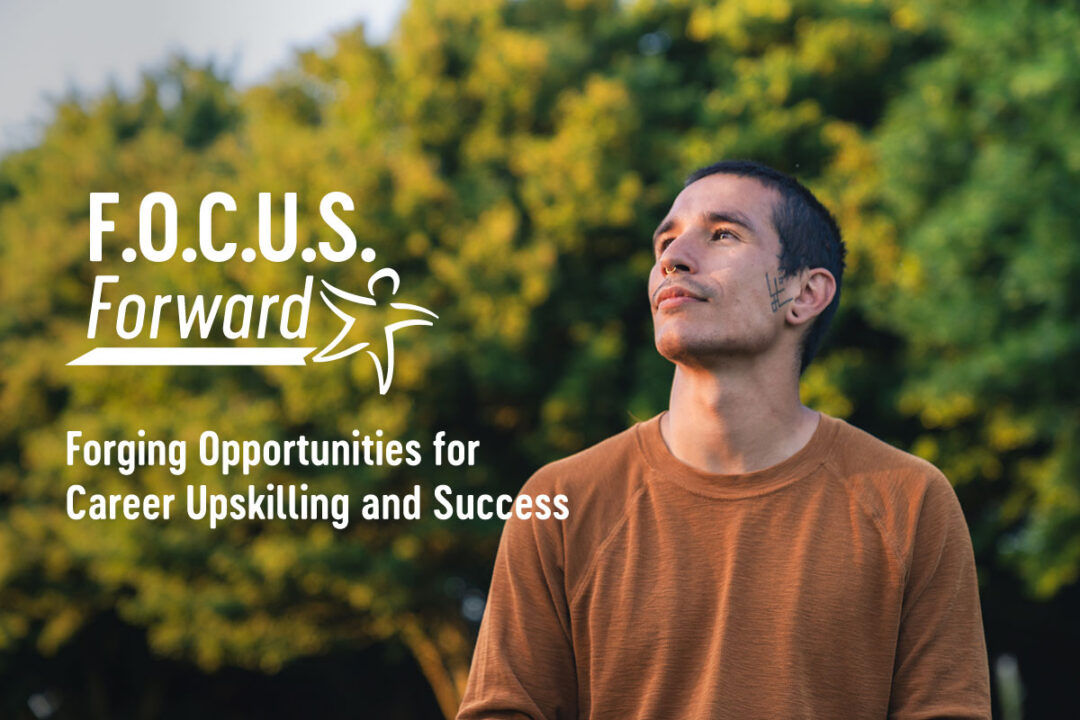
In Starr Commonwealth’s F.O.C.U.S. Forward program, young people ages 16–24 work toward education, employment, and greater independence while receiving individualized support for the everyday skills that make those larger goals possible. For one young person, that meant learning how to properly wash, dry, fold, and put away his clothes. For others, it has meant learning to maintain a living space or manage a budget that has to stretch across rent, groceries, bills, and everything else life requires.
They are small things, until you consider what they represent.
For those of us who work with young people, there can be a tendency to look at what someone isn’t doing and make assumptions about why. He should know how to do that by now. She isn’t taking responsibility. We’ve explained this before. They just aren’t motivated.
And perhaps one of the most important disciplines of trauma-informed, resilience-focused work is learning to become curious about the space between what we expect from a young person and what they are currently able to do. Because what looks like a lack of commitment may actually be a lack of capacity.
When “Should Know” Becomes an Assumption
There is an unwritten timeline attached to many of the expectations we place on young people. By a certain age, you should know how to manage your responsibilities. You should be able to regulate your emotions. You should know how to ask for help, solve a problem, keep an appointment, manage your time, advocate for yourself, or recover when something goes wrong.
But skills do not develop simply because birthdays pass.
They develop through experience. Through repetition. Through relationships. Through opportunities to try, make mistakes, receive guidance, and try again. And young people do not arrive in our classrooms, programs, clinics, or communities having had equal access to those opportunities. That does not mean we lower expectations. It means we become more thoughtful about what it may take for a young person to reach them.
The F.O.C.U.S. Forward story offers a powerful example. One participant entered Starr housing after experiencing homelessness and leaving high school. With support, he eventually reached a significant milestone: moving into an apartment of his own. He joined the workforce and began preparing to welcome a child. Even furnishing his apartment became part of the learning—identifying what he needed, finding community resources, reaching out for assistance, and advocating for himself.
It would be easy to look only at where his story began and create a narrative about him. Instead, consider what becomes visible when we look at what happened next.
Capacity Can Be Built
There is an important difference between saying, “You can’t do this,” and saying, “You may not be able to do this independently yet.”
The word yet leaves room for growth.
This is where trauma-informed practice is sometimes misunderstood. Understanding what is underneath a struggle is not the same as excusing it. Supporting a young person does not mean removing every expectation, preventing every consequence, or stepping in to do difficult things for them. In fact, F.O.C.U.S. Forward demonstrates almost the opposite.
The young people participating in the program are being asked to take on very real responsibilities: managing money, maintaining their homes, finding employment, accessing resources, keeping appointments, contributing to their community, and making decisions about their futures. Staff work alongside participants on the particular skills each person needs most. The expectation remains. What changes is the pathway toward reaching it.
That distinction matters because when we mistake capacity for commitment, our response often becomes an attempt to create more motivation: another reminder, another consequence, another conversation about responsibility, another “You need to try harder.”
But motivation cannot teach a skill that has never been learned. Consequences cannot create a resource that does not exist. Repeating an expectation does not necessarily increase someone’s ability to meet it.
Sometimes the more useful question is not, “How do we get this young person to care?” It is, “What might be standing between this young person and success?”
The Story We Tell Shapes the Support We Give
Consider a young person you know who struggles to follow through. Maybe they regularly arrive without what they need. Perhaps they shut down when work becomes difficult. They miss appointments. Their space is constantly disorganized. They need repeated reminders. They agree to a plan and then do not carry it out.
Now notice how quickly our minds can turn those observations into conclusions: Unmotivated. Irresponsible. Defiant. Lazy. Disengaged.
Those words describe who we believe someone is.
Trauma-informed curiosity asks us to stay with what we actually know a little longer.
What skill might still be developing?
What has this young person had an opportunity to learn?
What happens immediately before things fall apart?
What environmental barrier might we be overlooking?
What support could help them practice this successfully?
And perhaps most importantly: Are we looking at a lack of commitment, or are we looking at capacity that has not been built yet?
We may ultimately discover that a young person does need greater accountability. Trauma-informed practice does not require us to assume there is always a hidden explanation for every choice. It does, however, ask us to resist turning our first interpretation into our final conclusion. Curiosity keeps possibility open.
Working Alongside, Not Taking Over
One of the most meaningful details in the F.O.C.U.S. Forward story is easy to overlook: staff work alongside participants. Not ahead of them, removing every obstacle. Not behind them, waiting for them to figure everything out alone. Alongside. That is where healthy support lives.
A young person learning to advocate for themselves may initially need someone to help them identify whom to call. Eventually, they make the call. A student struggling with organization may initially need an adult to help create a system. Eventually, they manage the system themselves. A young person who becomes overwhelmed by a large task may initially need help breaking it into smaller steps. Eventually, they learn how to do that internally.
Support becomes a bridge rather than a destination.
And over time, something larger than the individual skill begins to develop: the experience of I can do hard things. I can solve problems. I can ask for help. I can recover when something doesn’t work. I can influence what happens next in my life.
That is resilience.
The F.O.C.U.S. Forward participants are not only learning laundry, budgeting, employment skills, or how to maintain an apartment. Through those everyday experiences, they are building confidence, responsibility, connection, and a stronger path forward.
Before We Decide They Aren’t Trying
Those of us who work with young people hold tremendous power in the stories we tell about them. The student who “doesn’t care” may begin to believe it. The teenager who is “irresponsible” may eventually stop imagining themselves as capable. But the opposite can also be true.
A caring adult can look at what a young person cannot do today without confusing it with what they are capable of becoming. That doesn’t require pretending challenges aren’t real. It requires believing development is still happening.
So perhaps the next time a young person leaves us wondering, Why won’t they just do it?, we can stay curious for a moment longer.
Do they understand what is expected?
Have they had an opportunity to develop the skills the expectation requires?
Are there barriers we cannot immediately see?
What can they already do that we can build upon?
And what would it look like to work alongside them without taking over?
The young man in F.O.C.U.S. Forward did not move from experiencing homelessness and leaving school to living independently because expectations disappeared. His story, as shared in Starr News, shows something much more hopeful: with opportunities to practice everyday skills, access support, connect with resources, and take increasing ownership of his future, new possibilities emerged.
Perhaps that is the invitation for all of us who work alongside young people. Not to decide what someone is capable of based solely on what they can do today. Not to mistake an unfinished skill for a finished story. And not to lower the bar, but to become more curious about the bridge a young person may need to reach it.
Because sometimes what looks like a lack of commitment is capacity still being built.
And sometimes the presence of one patient, curious, caring adult is part of how it gets built.
