
The joyful, powerful connection between STEM, SEL, and resilience
Picture this.
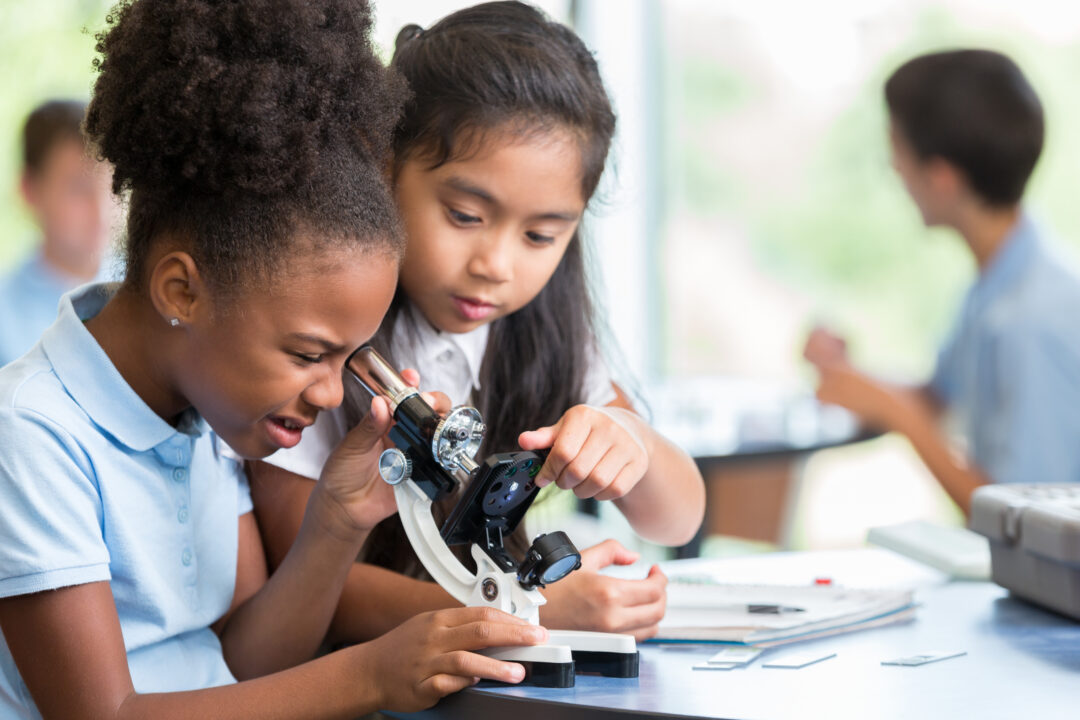
A group of students is huddled around a table.
There’s cardboard, tape, rulers, tablets—and a whole lot of laughing.
Something falls over. Someone groans. Someone else says, “Wait… what if we try it this way?”
No one is stopping to ask, “Is this SEL?”
And yet—it absolutely is.
This is the overlooked magic of STEM + SEL. When learning is hands-on, playful, collaborative, and meaningful, social-emotional growth is happening naturally, moment by moment. From a trauma-informed, resilience-focused lens, this kind of learning doesn’t just build academic skills, it helps students thrive.
Learning Lives in the Body, Not Just the Brain
Students—especially those impacted by stress or trauma—don’t learn best by sitting still longer, listening harder, or being told to “focus.” They learn when their bodies, senses, and brains are invited in together.
STEM does this almost effortlessly:
- Measuring, building, testing, redesigning
- Moving materials, touching textures, manipulating tools
- Watching cause and effect play out in real time
This kind of sensory, hands-on learning supports regulation. It gives restless hands something purposeful to do. It gives overwhelmed brains something concrete to anchor to. Abstract ideas become tangible. Learning becomes active instead of threatening.
When the nervous system feels safer, the brain becomes more available for curiosity, problem-solving, and persistence. In this way, STEM doesn’t just support cognition—it supports regulation, which is foundational for both learning and healing.
Every Step of STEM Is Also an SEL Skill
When we slow down and really look, STEM is a full SEL experience—without needing a separate lesson, block, or worksheet.
It begins with asking questions. Curiosity, wonder, and risk-taking are at play when students say, “I don’t know yet, but I want to find out.” That willingness to try is a social-emotional skill.
As students plan and collaborate, they practice communication, perspective-taking, flexibility, and compromise. They learn how to share ideas, listen to others, and navigate differences—often with guidance, modeling, and repair along the way.
Then comes building and testing, where frustration tolerance, emotional regulation, and perseverance are practiced in real time. Designs fail. Data surprises them. Materials don’t cooperate. Students learn to pause, problem-solve, ask for help, and try again.
Finally, through reflection and revision, students build self-awareness and confidence. They name what worked, what didn’t, and what they learned—not just about the project, but about themselves as learners.
This is SEL in motion. Not scripted. Not forced. Lived.
STEM as Project-Based Learning in Action — Through the Circle of Courage
STEM doesn’t borrow from project-based learning—it lives it. At its core, STEM invites students to ask questions, design solutions, test ideas, revise their thinking, and explain their learning. This process naturally creates learning environments where students feel connected, capable, empowered, and purposeful—the very conditions described in the Circle of Courage.
Belonging grows first. STEM learning is rarely solitary. Students work side by side, sharing materials, ideas, and responsibility. They talk through problems, learn from one another’s perspectives, and experience what it means to be part of a team working toward a common goal. For students who may struggle with trust or connection, these structured, shared tasks provide a safe way to belong without needing to have all the answers.
As students engage in building, testing, and revising, mastery begins to take shape. STEM normalizes trial and error. Designs fail. Data surprises. Hypotheses change. Instead of perfection, students experience growth through effort, feedback, and persistence. Over time, they begin to internalize a powerful belief: I can learn by doing. I can improve.
STEM also nurtures independence by honoring choice and creativity. There is rarely a single correct path to a solution. Students make decisions, take risks, and own their learning process. This sense of agency is especially important for learners who have experienced trauma or chronic stress, as it restores a feeling of control and competence.
Equally important, STEM naturally embraces multiple learning styles and modalities. Visual learners see models and diagrams take shape. Kinesthetic learners build, manipulate, and test. Verbal learners explain and reflect. Analytical learners organize data and refine solutions. Students can demonstrate mastery in many ways—through prototypes, presentations, drawings, data analysis, or reflection—reinforcing that there is more than one way to be successful.
Finally, generosity emerges when STEM learning connects beyond the classroom. Whether students are designing solutions for real-world challenges, improving accessibility, or addressing community needs, they experience how their learning can benefit others. Purpose transforms effort into meaning.
Through this STEM-centered, project-based approach, resilience is built quietly but powerfully. Students learn to persist through frustration, adapt when things don’t work, collaborate through differences, and take pride in growth over time.
They aren’t just completing projects. They are developing belonging, mastery, independence, and generosity—one design, one revision, one breakthrough at a time.
Why Fun and Play Matter More Than We Think
Let’s say it clearly: fun is not fluff, and play is not a break from learning. Play lowers stress. It deepens engagement. It strengthens relationships. It helps learning stick. For students carrying trauma, chronic stress, or adversity, moments of laughter, creativity, and shared success can be profoundly regulating.
Joy sends a powerful message to the brain:
I am safe. I am capable. I belong.
STEM doesn’t have to be rigid or high-pressure to be rigorous. It can be curious, messy, playful, and deeply human. When STEM is taught through connection, sensory engagement, collaboration, and meaning, it becomes more than preparation for future careers.
It becomes practice for life—learning how to try, fail, adjust, collaborate, and keep going.
That’s not just learning. That’s resilience in action. And the most beautiful part? Students don’t even realize they’re building it—because they’re too busy creating, experimenting, and playing their way forward.
