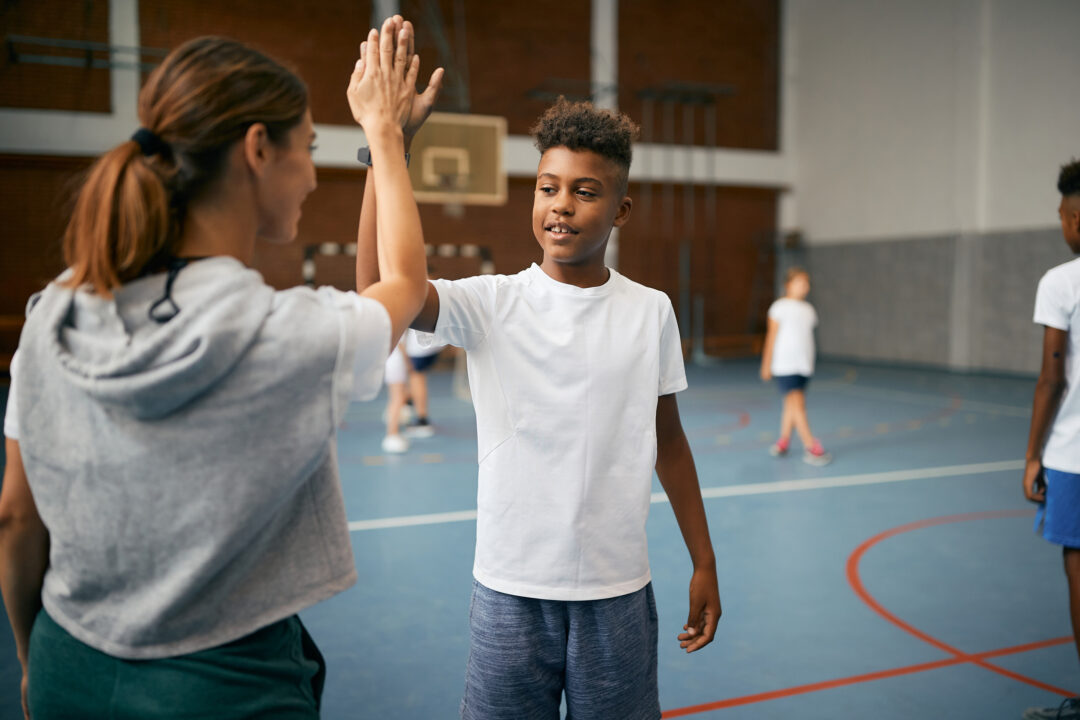
boy-giving-high-five-to-pe-teacher

The Power of Being Seen: Why Belonging Is a Universal Need (and a Daily Practice) 

There’s a moment, often subtle, when a young person realizes, “You see me.” 
Not the behavior. 
Not the mask. 
Not the file or the assumption. 
Me. 

Belonging isn’t a luxury; it’s biology. For youth who carry adversity or trauma, being seen isn’t just comforting—it’s regulating. It’s the soil where resilience grows. 

Belonging: The Universal Human Anchor 

Across decades of research—from Maslow’s hierarchy to modern neurobiology—we see the same truth repeated: humans thrive when they feel connected and valued. Dr. Bruce Perry’s work on relational health, the Center on the Developing Child’s research on buffering stress, and countless resilience studies all point to the same conclusion: 

Safe, attuned relationships are the most powerful antidote to toxic stress. 

When young people perceive themselves as unseen or misunderstood, their nervous system shifts into protection mode. We might see this as withdrawal, defiance, perfectionism, shutting down, lashing out, or “not caring.” But these are stress responses—efforts to cope, not character flaws. 

Flip that experience, though—let a young person feel recognized, respected, and valued—and the entire system softens. Their capacity for learning increases. Their coping strategies expand. Their self-concept strengthens. Their hope rises. 

Belonging literally reshapes the brain. 

“Perspective Is Reality”: Why Feeling Seen Matters More Than Our Intent 

One of the gentlest reminders we offer professionals is this: 
We may believe we’re being welcoming… but do students feel welcomed? 
We may think we’re being supportive… but do they experience support? 

Trauma research teaches us that the brain responds to perception, not intention. A student who feels invisible will operate as though they are. A youth who perceives adults as unsafe—even unintentionally—will engage in behaviors shaped by that reality. 

This is why our daily practice must shift from “I see you” to “You feel seen.” 

That’s the sweet spot. 
That’s where trust takes root. 
That’s where healing begins. 

The Regulation Loop: How Feeling Seen Mitigates Stress and Trauma Responses 

When youth experience being seen and understood—especially in moments of dysregulation—their physiological stress response shifts: 

  • Cortisol decreases 
  • Heart rate stabilizes 
  • Executive functioning becomes more available 
  • Adaptive behavior increases
  • Resilience characteristics—hope, autonomy, perseverance, connection—strengthen 

In effect: 
Co-regulation becomes self-regulation. 
Self-regulation becomes resilience. 
Resilience becomes possibility. 

Being seen isn’t just a “nice to have”—it’s a protective factor. 

So… How Do We Help Every Youth Feel Seen? 

Having established the science and impact of belonging, the next step is taking practical action.  Here are some concrete, do-tomorrow ideas—simple, human methods that create big relational impact: 

1. Greet the whole human, not just the role they’re in. 

Use names. Make eye contact. Offer warmth. 
A 3-second attuned greeting can shift a student’s entire physiological state. 

2. Reflect their strengths—especially the ones they don’t yet notice. 

Try this language: 
“I notice how persistent you are.” 
“You bring such creativity to this space.” 
“Your kindness changes the room.” 
Strengths reflected become strengths believed. 

3. Practice “micro-attunements.” 

Mini check-ins. A nod. A moment of soft curiosity. A quick “How’s today treating you?” 
Tiny actions, huge impact. 

4. Narrate the positive meaning you make of their behavior. 

Instead of interpreting defiance, interpret need. 
“You’re trying really hard to stay in control right now—I can see that effort.” 
This helps youth reinterpret themselves through a resilience lens. 

5. Invite voice, agency, and choice. 

Trauma steals control. 
Belonging restores it. 
Offering even small choices (“Would you rather start here or here?”) helps rewire powerlessness into empowerment. 

6. Celebrate lived experience—not just performance. 

A student’s cultural identity, background, and story should feel honored, not hidden. Representation is relationship. 

7. Repair quickly and without ego. 

Misattunements happen. Humans are human. 
But genuine repair says, “Our relationship matters more than the moment.” 

8. Keep curiosity at the center. 

What need is this behavior trying to meet? 
Curiosity transforms frustration into compassion—and compassion helps kids feel safe. 

Belonging Fuels Resilience 

When young people experience being seen: 

  • They take more risks in learning 
  • They recover more quickly from stress 
  • They internalize a positive self-concept 
  • They develop the capacity to form healthier relationships 
  • They build resilience that lasts into adulthood 


A sense of belonging is essential; it provides the core foundation for growth, resilience, and well-being. When belonging is prioritized, individuals feel secure and capable of reaching their potential. 

At Starr Commonwealth, we believe that true healing comes from consistently showing up for youth with intention and care. It’s the daily commitment to remind every young person: you matter here, you are valued, and you belong.  

A Final Word of Hope 

Every young person longs to be seen. And every caring adult has the power to be that mirror, that anchor, that calming presence that whispers: 

“I see you. I’m with you. You are not alone.” 

What a beautiful responsibility. 
What a transformative gift. 
What a profound way to change the world—one human connection at a time. 

focus article by dr Caelan soma about universal needs

Universal Needs

We've learned so much about trauma and resilience over the years. In fact, for the uninformed practitioner, the amount of information available nowadays can be daunting. So what do I talk about when I have friends or concerned parents approach me with questions about trauma or toxic stress affecting their loved ones?

It all comes back to our universal needs and the Circle of Courage®.

What are the Universal Needs according to the Circle of Courage®?

The Circle of Courage® is a model of positive youth development based on the universal principle that to be emotionally healthy all youth need a sense of belonging, mastery, independence, and generosity. This unique model integrates the cultural wisdom of tribal peoples, the practice wisdom of professional pioneers with troubled youth, and findings of modern youth development research.

  • Belonging

    • The presence of a strong sense of belonging makes young people more receptive to guidance from other community members. And, even if parents/caregivers are struggling, there are others there to help children. A sense of belonging helps children draw from a group as well as from themselves.
    • How can we connect with others?
      • Be continuously curious about how the child is experiencing their world.
      • Get to know them!
      • Find out their likes, dislikes.
      • Explore what they need most to feel supported.
  • Mastery

    • The goal of mastery is to achieve one’s potential, not perfection, and then contribute to and provide for their greater community. When success is met, the desire to achieve is strengthened.
    • How can we promote mastery?
      • Identify each child's potential.
      • Teach emotional awareness and regulation, and then practice with them.
      • Provide opportunities for students to experience their strengths.
  • Independence

    • In contrast to obedience models of discipline, teaching should be designed to build respect and teach inner-discipline. Children should be encouraged to make decisions, solve problems, show personal responsibility, and learn/practice emotional awareness and regulation. Adults can model, nurture, and guide, but children should be given opportunities to make choices without coercion.
    • How can we promote a sense of independence?
      • Provide choices.
      • Provide options.
      • Ask the child what they need the most.
  • Generosity

    • Children must be given opportunities to develop abilities for being generous and unselfish. In helping others, we create our own proof of worthiness, for we have the power to make positive contributions to the world. Children increase their sense of self-worth as they become committed to the positive value of caring for others.
    • How can we help children feel valuable?
      • Point out the child's self-worth.
      • Provide opportunities for them to experience their value when they help others!

It is important to keep in mind that children with broken circles may display distorted senses of their universal needs. For example, someone with a distorted sense of belonging may flock to gang involvement. You can learn more about distorted universal needs in the related materials below.

Unmet universal needs can be an enormous barrier to learning. At Starr, we know stressed brains can’t learn. We also have the tools and lessons to help you break through the social emotional barriers in children.

Reclaiming Youth at Risk draws on early youth-work pioneers, Native tribal wisdom, and youth development research by outlining the four essential elements every child needs in order to flourish and thrive: belonging, mastery, independence, and generosity. Together, these are known as the Circle of Courage®. This book also includes innovative approaches for building relationships with youth, fostering their self-esteem, and instilling positive values in any setting.

10 Steps to Create a Trauma-Informed School is informed by Reclaiming Youth at Risk, as well as the Circle of Courage®, and applies the teachings therein to a set of concrete steps for implementation in schools. Complete with behavior support plans, lesson examples, and resources for teachers and parents, 10 Steps is the foundation for any school seeking to establish an environment of safety and learning for all children.

FOCUSED FOLLOW-THROUGH

Have you taken the time to consider the universal needs of each of the children you care for? What simple opportunities arise every day where we can help bolster a kid's sense of belonging, mastery, independence, or generosity? These small moments can make an incredible impact on their self-worth!

FOCUS FURTHER

Learn more about universal needs from Starr Commonwealth's recent roundtable discussion with Dr. Soma, President Carey, and Executive Vice President Allen (Dr. Soma's co-author on 10 Steps to Create a Trauma-Informed School):

To learn more about universal needs, consider these offerings from Starr Commonwealth.

The Circle of Courage® was developed by Starr’s 2nd President, Dr. Larry K. Brendtro (PhD), and his colleagues at Augustana University.