
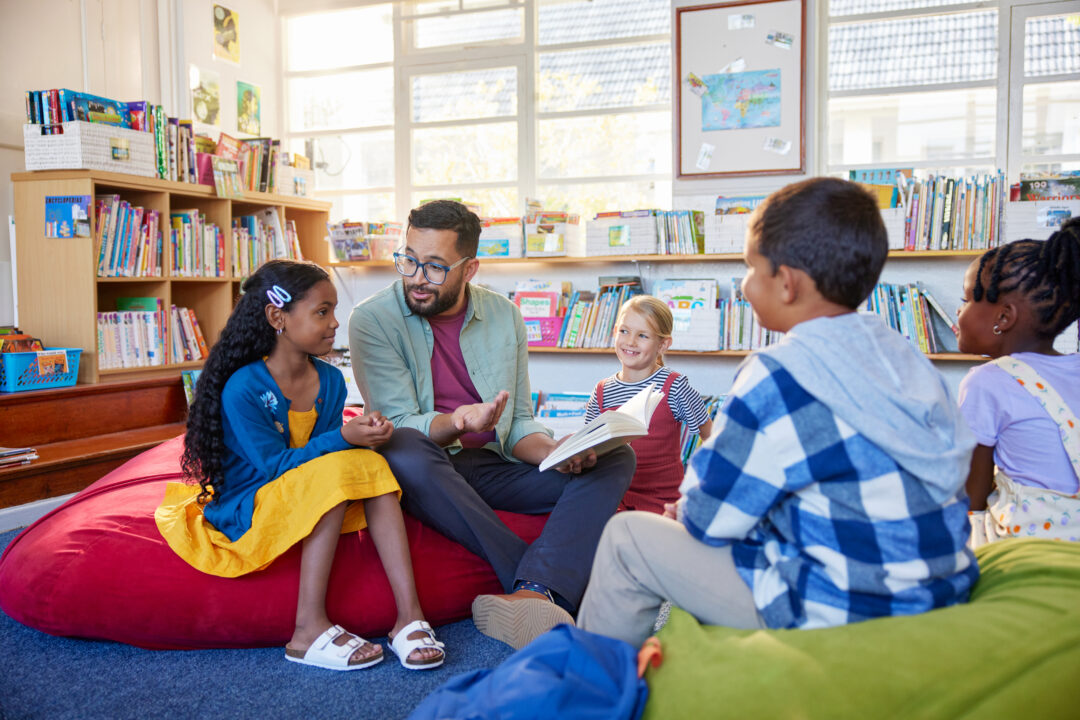
Happy February, friends and fellow advocates for youth. As we step into Black History Month, it’s a natural time to reflect on identity, heritage, and the spaces we curate for our students. But let’s go a layer deeper than the posters on the wall.
If you’re familiar with the Circle of Courage, you know that Belonging isn’t just a “nice-to-have” first quadrant—it’s the biological and psychological prerequisite for everything else. Without a secure attachment to a community, a student’s brain cannot fully pivot toward Mastery, Independence, or Generosity.
However, there is a nuance we often miss in the hustle of a school day: Perception is reality. We can have the best intentions, the most inclusive curriculum, and a “warm” demeanor, but if a student doesn’t experience that warmth as safety, the intention doesn’t matter. Belonging isn’t something we give to a student; it’s an emotional state they must authentically inhabit as their true self.
The Gap Between Intention and Experience
For a student navigating a marginalized identity—or a student carrying the invisible weight of trauma—the classroom can feel like a place where they have to “perform” to fit in. When a child has to mask their culture, their language, or their emotional state to be accepted, they aren’t experiencing belonging. They are experiencing conditional inclusion.
To move from inclusion to true belonging, we have to look at the “hidden curriculum” of our classrooms.
Deep Strategies for Authentic Connection
- Audit the “Mirror vs. Window” Balance: We often talk about books being mirrors (reflecting the self) and windows (seeing others). In a resilience-focused space, a student needs to see their authentic self mirrored in the power structures of the room. Do they see their identity reflected in who gets called on for leadership? In whose history is centered during “normal” lessons, not just designated heritage months?
- The Power of Radical Validation: When a student’s “reality” (their perception of a situation) differs from ours, our instinct is often to correct them. “I didn’t mean it that way,” or “That’s not what happened.” To foster belonging, we must first validate the emotion. If a student feels excluded, they are excluded in their nervous system. Start there. Meeting them in their reality creates the safety required to eventually bridge back to yours.
- Co-Constructed Culture: Belonging is strongest when students have “fingerprints” on the environment. Move away from “I set the rules” to “We build the community.” When students help define what respect looks like or how the physical space is arranged, they see their identity woven into the literal walls of the room.
- The “Two-Minute” Relationship Investment: Research often points to the “2×10” strategy (spending two minutes a day for ten days talking to a student about anything except school). But let’s add a layer: use that time to learn about their cultural capital. What are they experts in at home? What music regulates them? When we value what they value, we signal that their true self is the one we want in the room.
Identity as a Shield, Not a Target
This month, as we celebrate the profound contributions of Black leaders, let’s remember that identity is a source of resilience. For a student to navigate a world that isn’t always kind, they need a classroom that acts as a “brave space”—a place where their identity is a shield of pride, not a target for correction.
Belonging is the soil. If the soil is rich, the identity grows strong. If the soil is thin, the student spends all their energy just trying to stay upright.
Let’s commit this month to being the architects of a belonging so deep that every student—regardless of race, background, or ability—can finally exhale and say, “I am home here.”
What is one “invisible” way you’ve noticed students seeking belonging in your space lately? We’d love to hear your observations as we dive deeper into this work together, connect with us on our socials!

