
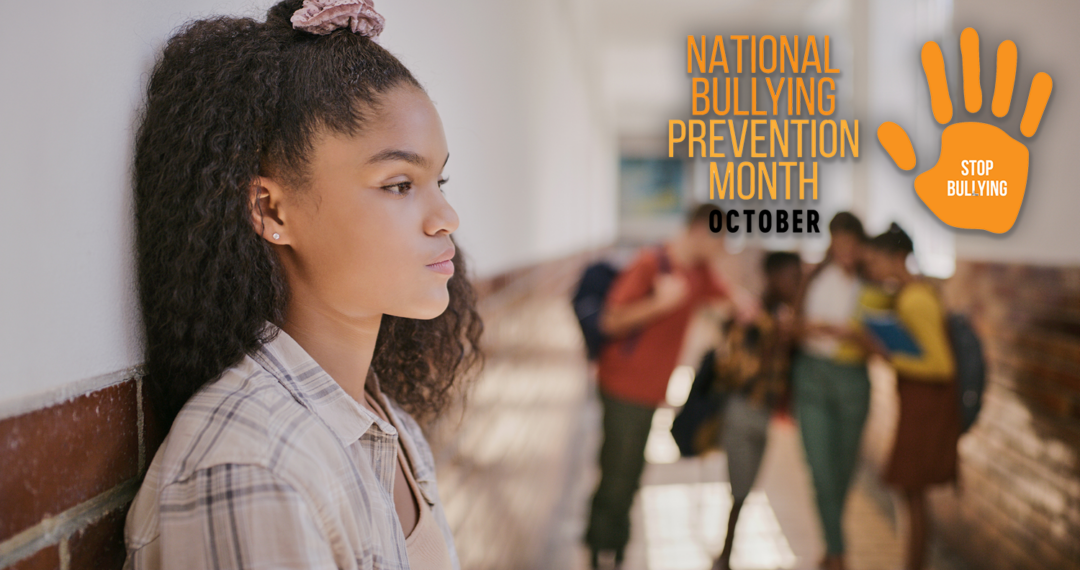
How relationships, restorative practices, and everyday opportunities for connection can help build schools where every student belongs.
Every October, schools across the country come together for National Bullying Prevention Month. Hallways fill with messages of kindness, students make pledges to treat one another with respect, and educators remind ucircle of cs of something we all believe: every child deserves to feel safe, seen, and valued.
But what happens when October ends?
The posters come down, the assemblies are over, and students return to the same classrooms, cafeterias, and playgrounds where relationships are being shaped every day.
Perhaps the most meaningful question we can ask this month isn’t simply How do we stop bullying? but rather, How do we create school communities where every child has a meaningful place to belong?
Because bullying prevention is about more than addressing harmful behavior. It’s about nurturing relationships, skills, and experiences that help young people thrive.
Understanding the Difference Between Conflict and Bullying
Not every disagreement, hurt feeling, or unkind interaction is bullying. Understanding the difference matters because our response should reflect what students are experiencing.
Conflict is a natural part of relationships. Students may disagree, become frustrated, or struggle to see another person’s perspective. When both students have relatively equal power, these moments can become opportunities to teach communication, emotional regulation, empathy, and collaborative problem-solving.
Bullying, however, involves unwanted aggressive behavior, a real or perceived imbalance of power, and behavior that is repeated or has the potential to be repeated. Unlike ordinary conflict, bullying involves one student using power to harm, intimidate, or exclude another.
This distinction is especially important when considering restorative practices. While peer conflict may benefit from facilitated dialogue and shared problem-solving, bullying requires adults to first establish safety, address the power imbalance, and hold the student causing harm accountable.
Both situations call for connection, guidance, and opportunities to develop new skills. But they do not call for identical interventions.
The goal isn’t to label every difficult interaction as bullying. It’s to understand what is happening so we can respond with the right balance of protection, accountability, and support.
Looking Beyond the Behavior
Imagine a student making an unkind comment in the cafeteria. A few classmates laugh. Another student looks down, embarrassed. An educator intervenes, addresses the behavior, and everyone moves on.
But beneath that brief interaction, something more complicated may be unfolding.
Was the student seeking approval from peers? Trying to establish control? Looking for a way to feel powerful or important?
These questions don’t excuse the behavior. They invite us to better understand it so we can teach something different.
At Starr Commonwealth, the Circle of Courage offers a helpful lens for understanding the universal growth needs that shape young people’s development: Belonging, Mastery, Independence, and Generosity.
Every child needs to feel connected, capable, empowered, and valuable to others. Yet sometimes, the ways young people attempt to meet these needs become distorted.
A student seeking Belonging may exclude someone else to gain acceptance from a group. A desire for Mastery may become a need to appear superior. Independence may be expressed through controlling others, while the desire for Generosity may become tangled with gaining attention at another person’s expense.
The Circle of Courage helps us recognize something hopeful: the same needs that may be expressed through harmful behavior can also guide us toward healthier relationships and meaningful change.
We can hold students accountable for the harm they cause while continuing to believe in their capacity to grow.
Relationships Are the Foundation. Skills Are the Bridge.
We often tell students to be kind, include others, and make good choices. But these are skills that must be intentionally taught, modeled, practiced, and reinforced.
A child who struggles to manage frustration may need explicit instruction in emotional regulation. A student who relies on social exclusion may need support developing empathy and healthy friendship skills. A young person who uses intimidation to solve problems may need opportunities to practice communication, conflict resolution, and responsible decision-making.
This is where social-emotional learning (SEL) becomes an essential part of bullying prevention.
When educators intentionally teach students to recognize emotions, consider another person’s perspective, navigate disagreements, solve problems, and seek help, they are building skills that strengthen relationships and help prevent harm.
And these lessons are most powerful when they extend beyond a designated SEL block.
They happen when a teacher models how to disagree respectfully. When students practice solving a problem together instead of competing for control. When an adult helps a child find the words to express frustration, or when classmates learn how to safely support someone experiencing exclusion.
Small moments become meaningful opportunities to practice the skills of belonging.
Relationships create the safety to learn. Explicit instruction gives students the skills to succeed within those relationships.
Responding to Harm With Safety, Accountability, and Hope
Even in the most connected school communities, bullying can happen. And when it does, our response matters.
A restorative approach invites us to move beyond asking only, “What rule was broken, and what consequence is deserved?” toward also asking, “Who was harmed, what do they need, and what must happen to make things right and prevent further harm?”
This doesn’t mean overlooking behavior or replacing accountability with a conversation. It means recognizing that meaningful accountability includes learning, responsibility, and changed behavior.
For educators and school professionals, a few intentional practices can make a difference:
Protect first, connect second. Interrupt the behavior, establish safety, and privately support the student who was harmed. Listen without judgment, communicate that the bullying is not their responsibility, and create a plan to prevent further incidents.
Invite reflection, not shame. Meet separately with the student who caused harm. Ask what happened, who was affected, and what they could do differently. Explore what they were hoping to accomplish and help them identify healthier ways to meet that need.
Teach the missing skills. Model and practice empathy, emotional regulation, communication, and problem-solving. Help students rehearse what they might say or do differently the next time they experience a similar situation.
Make accountability meaningful. Develop a plan that addresses the harm, establishes clear expectations, and includes follow-through. Restorative conversations between students should never be forced, particularly when a power imbalance exists. Safety and the wishes of the student harmed must guide the process.
A restorative response is not complete when an apology is offered or a consequence is served. It continues through the relationships we repair, the skills we teach, and the safety we work to restore.
Creating a School Where Every Student Has a Place
Perhaps the greatest opportunity for bullying prevention is found in what we do before bullying ever occurs.
Rather than relying solely on individual interventions, schools can intentionally build environments where the four universal growth needs are nurtured every day.
Belonging grows when students are greeted by name, welcomed into relationships, and know there is a trusted adult who will notice when something isn’t right.
Mastery grows when students experience success, discover their strengths, and learn that their worth is not measured by comparison to others.
Independence grows when young people have a voice, participate in classroom problem-solving, and practice using their influence responsibly.
Generosity grows when students experience the joy of helping others, welcoming someone new, and contributing something meaningful to their school community.
Imagine the collective impact of these experiences woven throughout a school day.
Morning meetings that nurture connection. Classroom agreements developed together. Explicit SEL instruction that gives students language for emotions and strategies for solving problems. Peer mentoring that celebrates strengths. Adults who model curiosity, compassion, and respectful accountability.
These practices may seem simple, but their consistency matters.
And they require a shared commitment. Teachers, administrators, counselors, support staff, families, and students all contribute to the culture of a school. When adults feel connected and supported themselves, they are better positioned to create those same experiences for young people.
Bullying prevention becomes more than a program or an annual initiative. It becomes part of how a school community lives, learns, and cares for one another.
The Work That Lasts Beyond October
There is something hopeful about recognizing that bullying prevention doesn’t depend on one perfect lesson, one powerful assembly, or one educator having all the answers.
It grows through relationships. Through the patient work of teaching skills. Through everyday opportunities for students to feel capable, connected, and valued.
And through the belief that young people can learn healthier ways to meet their needs, take responsibility for their actions, and contribute positively to the communities around them.
This October, let’s continue teaching kindness. Let’s continue addressing bullying with clarity and care. But let’s also look beyond the behavior and invest in the relationships and developmental needs that shape it.
Because when we nurture Belonging, Mastery, Independence, and Generosity, we aren’t simply teaching students how to avoid hurting one another.
We’re helping them discover how to care for one another.
And that is a lesson worth carrying into every month of the school year.

