

Small, intentional routines that strengthen relationships, nurture resilience, and help us better understand the students we serve.
Some of the most meaningful moments in our classrooms happen when we give ourselves permission to slow down.
A student shares something they’re proud of. Another mentions a difficult morning. Someone who rarely speaks offers a thought that makes the entire class smile.
Nothing elaborate. No perfectly planned lesson. Just a few minutes of connection.
As educators, we know relationships matter. We see it in the students who seek us out for reassurance, the trust that develops over time, and the small moments of growth that remind us why we do this work.
And as we continue growing in our trauma-informed, resilience-focused practices, we’re always discovering new ways to be more intentional with the relationships we’re already building.
One beautifully simple opportunity? The classroom check-in and check-out circle.
A Familiar Practice With a Deeper Purpose
Many of us already use morning meetings, community circles, or informal conversations to connect with students. These routines create a natural space for building relationships, practicing social-emotional skills, and strengthening classroom community.
But what if we approached these moments with an additional layer of curiosity?
Not simply, What would be a good question to ask today? but, What might this conversation help me understand about what my students need today?
Consider a Monday morning check-in. Students gather in a circle, revisit their shared agreements for listening and respect, and take turns responding to a simple invitation:
Tell us one thing about your weekend. It could be something fun, something ordinary, or even something hard.
There’s something meaningful about making room for all three.
Not every student has an exciting story to tell. Not every weekend is restful or predictable. And not every child arrives on Monday feeling ready to jump into learning.
By welcoming the ordinary alongside the exciting and difficult, we communicate that every student’s experience has a place in our classroom community.
And when we use a talking piece, move intentionally around the circle, and practice listening without interruption, we’re doing more than facilitating conversation. We’re explicitly teaching patience, empathy, respect, and the value of every voice.
This is where a familiar classroom routine becomes an intentional trauma-informed practice.
Listening Through a Trauma-Informed Lens
We know that stress and adversity can influence a student’s ability to concentrate, regulate emotions, navigate relationships, and engage in learning. We also know that behavior doesn’t always tell us the whole story.
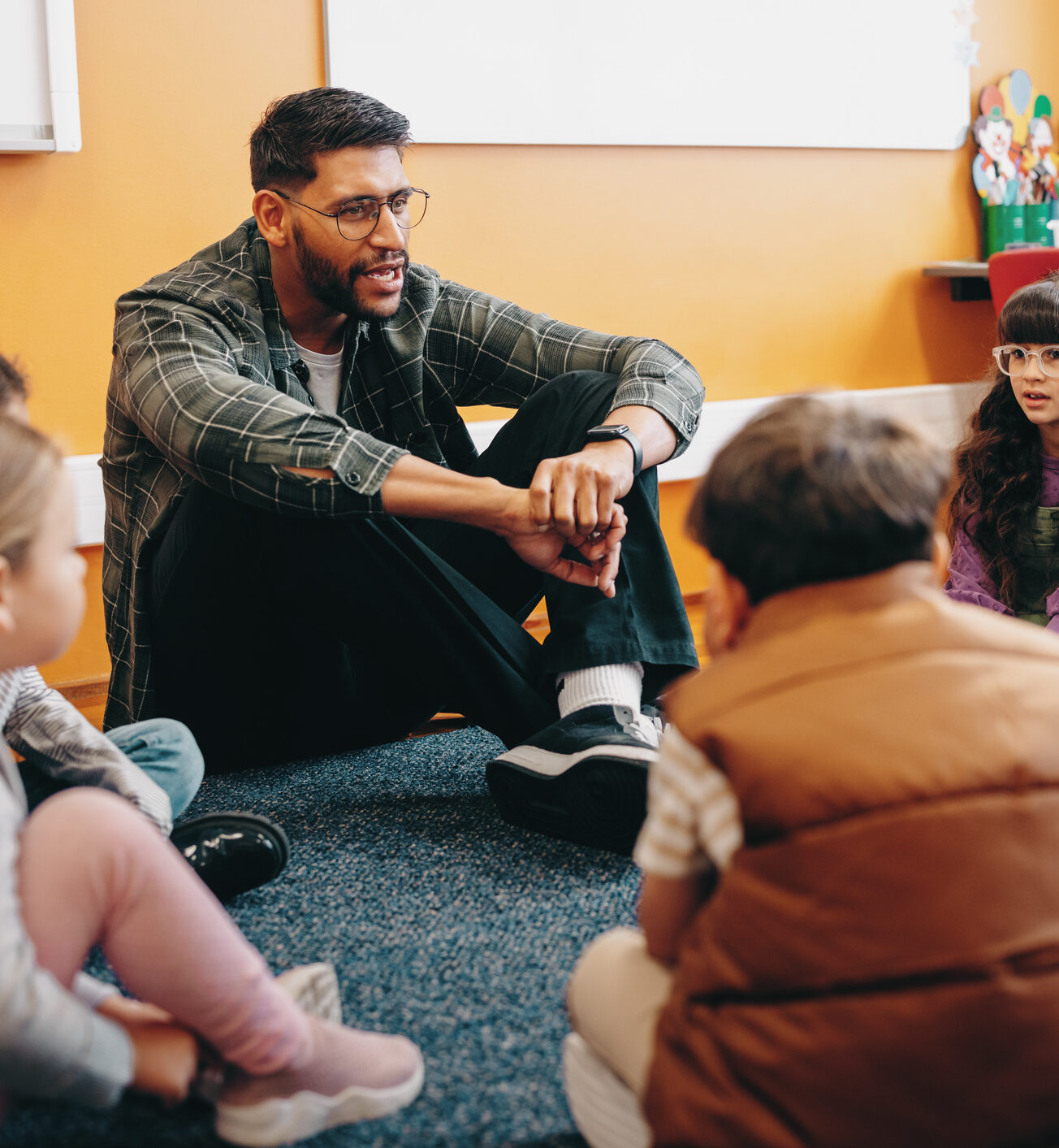
A student who seems distracted may be worried about something outside of school. A child who is unusually quiet may need time to settle. Another who appears restless may be experiencing excitement, anxiety, or simply the challenge of transitioning into a new routine.
Rather than making assumptions, a check-in circle gives us an opportunity to remain curious. And curiosity is one of our most valuable tools.
We can deepen this practice by occasionally inviting students to notice how they’re feeling in their bodies.
A brief body scan or body mapping activity might encourage students to recognize where they experience tension, excitement, calm, or nervousness.
Do your shoulders feel relaxed or tight? Does your stomach feel settled or fluttery? What might your body be telling you today?
These gentle invitations build body awareness, an important part of developing emotional regulation skills. They also remind us that students may be experiencing feelings they don’t yet have the words to describe.
For students who have experienced trauma, predictable opportunities for connection can be especially meaningful. Familiar routines, clear expectations, and consistent adult responses can contribute to a greater sense of safety and belonging.
Of course, a circle isn’t about asking students to disclose personal struggles. Participation should always feel emotionally safe, with opportunities to pass, listen, or express themselves in different ways.
The goal isn’t to get every student talking. It’s to create a community where every student knows their voice matters, whether they choose to share or simply listen.
Don’t Forget the Check-Out
While morning meetings often receive our attention, there’s something equally valuable about how we end our time together. Consider the transition into a Friday afternoon.
For some students, the weekend brings excitement, family time, and opportunities to recharge. For others, leaving the structure and predictability of school may bring uncertainty.
A Friday check-out offers a moment to acknowledge both possibilities while helping students reflect on their growth.
Invite students to share something they accomplished during the week and something they’re looking forward to. You might also offer space to identify anything they’re feeling uncertain about or would appreciate support with before leaving.
These questions invite students to recognize their strengths, celebrate progress, and identify needs.
They also offer opportunities to nurture Mastery, one of the four universal growth needs within Starr Commonwealth’s Circle of Courage. When students pause to notice what they’ve accomplished, even in small ways, they begin to recognize themselves as capable learners and problem-solvers.
And just as importantly, we have another opportunity to notice students who may benefit from a quiet conversation before heading home.
A thoughtful check-out can help us end the week with the same intentionality we bring to beginning it.
Making the Most of What Students Share
Perhaps the most important part of a check-in or check-out circle happens after the talking piece has made its way around the room.
It’s what we do with what we’ve learned.
When a student mentions a difficult weekend, we might offer a quiet moment of connection before beginning instruction. When someone shares excitement about an accomplishment, we can celebrate their growing confidence. When a student expresses worry about the weekend ahead, we can follow up privately and explore what support may be helpful.
These are opportunities to be proactive rather than reactive.
A supportive time-in conversation, a thoughtful adjustment to our expectations, or a connection to additional resources may help a student navigate a challenge before it becomes overwhelming.
And these moments don’t always need to be serious.
A playful get-to-know-you game, a meaningful quote, a shared celebration, or a jar filled with creative sentence starters can bring variety and joy to the circle while continuing to strengthen relationships.
As we refine our practice, a few simple reminders can help:
Keep it predictable. Familiar routines and shared agreements help students know what to expect.
Make participation flexible. Offer opportunities to speak, pass, draw, gesture, or simply listen.
Notice strengths alongside needs. Celebrate accomplishments, interests, hopes, and contributions.
Follow up with intention. When students share something meaningful or concerning, consider how you can respond with care beyond the circle.
The goal isn’t to perfect another classroom strategy. It’s to use the opportunities we already have with greater awareness and purpose.
The Difference a Few Minutes Can Make
One of the most encouraging parts of becoming more trauma-informed and resilience-focused is recognizing that meaningful change doesn’t always require something entirely new.
Sometimes, it means seeing a familiar practice through a different lens.
A Monday morning circle becomes an opportunity to notice what students are carrying into the week. A Friday reflection becomes a chance to celebrate strengths and anticipate support needs. A talking piece becomes a tool for teaching empathy and respect.
And a simple question becomes an invitation to connect.
Over time, these repeated experiences help shape the relationships and sense of community that make learning possible.
As educators, we won’t always know everything our students are navigating. We won’t always have the perfect question or the immediate answer. But we can keep showing up with curiosity, consistency, and care. Because sometimes, becoming more trauma-informed isn’t about doing more. It’s about discovering the deeper purpose in what we’re already doing.
Continue Growing Your Trauma-Informed Practice
Looking for more practical ways to strengthen relationships, recognize student needs, and foster resilience?
Explore Starr Commonwealth’s Certified Trauma & Resilience Coach (CTRC) training to deepen your understanding of trauma and resilience and discover strategies you can bring into your work with children and young people.

