Recognizing Signs of Student Distress Early in the School Year

The first few weeks of school can feel like a whirlwind—new faces, fresh supplies, routines still settling in. But beneath the surface of pencils, planners, and name tags, students are communicating with us in various ways, and sometimes behaviors can speak louder than words.

A slammed locker. A sudden outburst. A student who never raises their hand. These aren’t just behaviors to “manage.” They’re messages.

And here’s the truth: as educators, we don’t need to have all the answers. We just need to start with a curious mindset—one that asks, “What need might be going unmet?” or “What’s happening with this student right now?”

That shift—from judgment to curiosity—is the first step toward becoming trauma-informed.

Behavior as Communication

Every student behavior has a story behind it. Sometimes it’s obvious—a child who’s tired after a late night. Other times, the story is hidden—anxiety, grief, or unmet needs that haven’t yet found words.

When we approach behavior as communication, we stop asking “What’s wrong with this student?” and start asking “What happened to them?” or even “What’s happening now?”

🌟 Pause & Reflect: The next time a student’s behavior challenges you, take a breath and ask yourself, “What need might this student be trying to communicate?”

How Students Seek to Meet Their Needs

One of the most compassionate truths we can remember is this: students are always trying to get their needs met in the best way they know how (aren’t we all?).

For some, those strategies are effective and adaptive. For others—especially those who have experienced trauma or instability—those strategies can be distorted, absent, or even harmful. Until we help students learn more effective ways to meet their needs, we must stay curious and supportive.

Externalized patterns might look like:

  • Explosive anger or outbursts when frustrated
  • Seeking connection by interrupting, clowning, or picking fights
  • Testing limits repeatedly to check if adults will stay consistent
  • Risk-taking behaviors to gain peer approval or control

Internalized patterns might look like:

  • Withdrawing from peers or refusing to participate
  • Perfectionism or over-compliance as a way to stay “safe”
  • Frequent physical complaints (headaches, stomachaches) as a mask for anxiety
  • Self-blame or statements like, “I’m just dumb,” when work feels difficult

In both cases, the behaviors are not “kids acting out”—they are survival strategies. When we notice these patterns, it’s an invitation to guide students toward healthier ways of getting their needs met, whether that’s teaching coping skills, offering choice, or connecting them to deeper support.

🌟 Pause & Reflect: As you notice student behaviors—loud or quiet—ask yourself, “Could this be the best way this child knows right now to meet a need for safety, connection, or control?”

Signs to Look For Early in the Year

Every classroom is different, but some early signs of student distress often include:

  • Sudden withdrawal – a student who avoids eye contact or disconnects from peers.
  • Escalated emotions – anger, irritability, or tears that feel “out of the blue.”
  • Changes in participation – a once-engaged student who stops completing work or contributing.
  • Physical signals – frequent headaches, stomachaches, or restlessness.
  • Connection-seeking patterns – disruptions that might actually signal a need for relationship or reassurance.

Remember: these aren’t red flags for labeling; they’re invitations to get curious.

🌟 Pause & Reflect: As you think about your students this week, ask yourself, “Have I noticed shifts in mood, engagement, or energy—and how might I respond with curiosity instead of judgment?”

🌟 Note for Educators: These are not checklists for diagnosing, but invitations to wonder. By shifting from “What’s wrong with this student?” to “What’s this student trying to tell me?” we create space for healing and growth.

The Power of Getting Curious

In my own classroom, the most powerful tool I had wasn’t a strategy or program—it was the practice of getting curious.

  • I’m curious about what might be making math so overwhelming for this student today.
  • I’m curious about what happened before school that led to such a hard morning.
  • I’m curious about what support this student might need that I can’t provide on my own.

That mindset shifted my role from “problem fixer” to “curious connector.” And often, being the first adult to notice distress and connect a student to support became a turning point in their healing.

🌟 Pause & Reflect: Consider, “Who are the trusted colleagues or resources in my school that I can lean on when a student needs more than I can give alone?”

You Don’t Have to Do It Alone

Here’s the good news: you’re not expected to be a counselor, therapist, or crisis expert. What you are is a trusted adult who spends hours each day noticing, listening, and creating safe spaces for kids.

And often, your noticing is the lever. When you flag a concern, ask a gentle question, or guide a student toward the right level of support, you open the door to healing.

Building Confidence Together

At Starr Commonwealth, we know these moments can feel heavy. That’s why we provide trauma-informed training for teachers that empowers educators to recognize signs of distress, respond with curiosity, and connect students to resources without burning out. You can also take advantage of our flexible, budget-conscious professional development sessions for your entire school.

You don’t have to have all the answers—you just have to begin with curiosity. And that’s enough to change a child’s story.

Early in the school year, every student is testing the waters, asking silently: “Is this a place where I’ll be safe?” When we interpret behavior as communication and respond with compassion, the answer becomes a resounding yes.

How to Create a Trauma-Informed Classroom from the First Month of School  

Picture this: The first weeks of school are a blur of new faces, routines, and expectations. Whether your “back to school” started last week or is still around the corner, one thing is true everywhere—students are walking into our classrooms carrying more than backpacks. They bring hopes, fears, past experiences, and dreams. As educators, our role isn’t just to teach content; it’s to shape a trauma-informed classroom where every student feels safe, valued, and capable of thriving.  

That’s the heart of trauma-informed teaching. And the good news? You can begin weaving it into your routines from the very start of the year—and keep strengthening it as the weeks unfold.  

Why Trauma-Informed Practices Matter for Back-to-School  

Research tells us that trauma affects how students learn, behave, and connect. But here’s the hopeful part: relationships heal. Classrooms can become places of belonging, resilience, and growth when we lean into trauma-informed classroom strategies that are both strengths-based and proactive.  

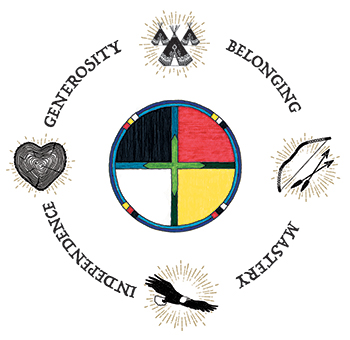
At Starr Commonwealth, we ground our work in the Circle of Courage—a framework that highlights four universal needs for all children: Belonging, Mastery, Independence, and Generosity. When educators focus on these strengths, they create safe learning environments where healing and learning walk hand in hand.  

Circle of Courage

Trauma-Informed Classroom Strategies: 4 Ways to Begin This School Year  

1. Belonging: Creating Safe and Connected Classrooms  

At the heart of the Circle of Courage is Belonging—the deep need every child has to feel loved and connected. For students who’ve experienced trauma, disconnection and isolation can be overwhelming. A trauma-informed classroom built on belonging reassures them: “You are safe here, and you are not alone.”  

Greet each child by name, learn something personal about them, and celebrate their unique identity. Create rituals—like a morning check-in or class mantra—that say, “You belong here.”  

Pro Tip: A simple smile and consistent presence communicate safety more than a thousand words.  

2. Mastery: Building Confidence Through Growth  

Mastery represents the universal need for children to feel competent and capable. Trauma often whispers to students that they’re “not enough.” By focusing on growth and effort, rather than perfection, you help students regain confidence in their abilities.  

Shift the spotlight from right answers to progress. Celebrate effort, persistence, and creativity. Trauma-informed teaching normalizes mistakes as part of learning and reinforces that every child has strengths worth developing.  

Quick Win: Post a “Wall of Growth” where students showcase skills they’ve improved, no matter how small.  

3. Independence: Empowering Student Voice and Choice  

Children flourish when they feel a sense of control over their world. The Circle of Courage refers to this as Independence—the universal need to feel empowered, respected, and trusted to make decisions. For students impacted by trauma, this autonomy can restore dignity and hope.  

Offering choices—even small ones, such as where to sit, how to complete an assignment, or which book to read—helps restore empowerment. When students feel trusted, they are more likely to rise to the occasion.  

Teacher Hack: Create a “Choice Board” for assignments or classroom jobs to give students meaningful voice and agency.  

4. Generosity: Nurturing Resilience Through Contribution  

The final piece of the Circle of Courage is Generosity—the need to contribute, give, and experience the joy of helping others. Trauma can make the world feel scarce and self-protective. But when students practice generosity, they experience resilience, connection, and joy.  

Encourage students to support peers, share their knowledge, or contribute to the classroom community. Opportunities to give—even small ones—help them see themselves as valuable members of the group.  

Easy Idea: End the week with a “Shout-Out Circle,” where students highlight each other’s strengths.  

Trauma-Informed Training & Resources for Educators  

Building a trauma-informed classroom isn’t about adding more to your already full plate—it’s about shifting how we approach what we’re already doing.  

At Starr Commonwealth, we’ve walked alongside thousands of educators worldwide, offering practical trauma-informed training for teachers, easy-to-use resources, and strategies that help staff, students, and families flourish.  

From professional development workshops to our online trauma-informed teaching resources, we equip schools to turn the first day—and every day—into an opportunity for healing, connection, and growth.  

Ready to Begin?  

As you and your students settle into the rhythm of a new school year, imagine the impact of a classroom that radiates safety, belonging, and resilience—not just on the first day, but throughout the entire year. This is the kind of environment where students flourish and educators feel energized, supported, and inspired.  

👉 Explore Starr Commonwealth’s Trauma-Informed Training and Resources  

Final Thought: You already have what it takes to create a trauma-informed classroom. Starr is here to walk alongside you, giving you the tools and support to strengthen what you’ve started this school year. Together, we can build learning environments where all children—and all educators—thrive. 

Beyond the In-Service: Professional Development That Actually Changes Monday Morning

There’s something about late summer that brings a familiar knot to the stomach of anyone who works in schools. Maybe it’s the weight of knowing that behind every name on your roster is a story—some filled with joy, others carrying pain you can’t yet see. Maybe it’s wondering how you’ll reach the student who shut down last spring, or support the colleague who’s been running on empty for months. 

If you’re feeling this way, you’re not alone. And more importantly, there are concrete steps we can take to make this year different—not through grand gestures or overwhelming overhauls, but through small, intentional practices that recognize the humanity in everyone who walks through our doors. 

The Truth About What We’re Really Dealing With 

Let’s start with what we all know but don’t always say out loud: our students and colleagues are carrying more than we can see. The child who seems defiant might be operating from a nervous system that’s learned the world isn’t safe. The colleague who snaps in meetings might be drowning in compassion fatigue. The parent who doesn’t respond to emails might be juggling three jobs and a housing crisis. 

When we understand that behavior is communication, often about unmet needs for safety, connection, or control, everything shifts. This isn’t about excusing harmful actions, but about responding with curiosity instead of judgment, connection instead of immediate consequence. 

Starting Where Connection Lives: Simple Practices That Change Everything 

The beauty of trauma-informed approaches is that they often look like the best teaching practices we already know, just applied more intentionally. Here are some concrete ways to build connection and safety from day one: 

Creating Predictable Safety in Your Space 

  • Morning connections don’t require elaborate programs. A genuine “How are you really doing today?” paired with eye contact and patience for the actual answer creates more safety than any poster on the wall. When students know they’ll have a moment to be seen each day, their nervous systems can begin to settle. 
  • Classroom circles might sound time-consuming, but five minutes of sharing highs and lows or simply checking in can prevent hours of behavioral interventions later. The research on school connectedness is clear: when students feel genuinely known by at least one adult, everything from attendance to academic achievement improves. 
  • The 5:1 ratio of positive to corrective interactions isn’t just a nice idea—it’s a neurobiological necessity. Our brains are wired to notice threats, so we need five times as many positive experiences to balance each correction. This means celebrating small wins, noticing effort, and finding reasons to connect that have nothing to do with academics. If you’re looking for more concrete tools and strategies to implement this approach, additional resources can provide practical materials to support these daily interactions. 

Supporting Regulation Over Punishment 

  • Co-regulation techniques recognize that when someone is dysregulated, they can’t think clearly until they feel safe again. Instead of sending a student to the office, try sitting with them, matching their breathing rhythm, and helping them return to a state where learning is possible. 
  • Time-in instead of time-out keeps the connection intact when children are struggling. A comfort corner with sensory tools, books, or fidgets gives students a way to regulate without losing access to relationship and learning. 
  • Brain breaks and movement aren’t rewards for good behavior—they’re necessities for human beings whose brains need variety and physical activity to function optimally. Building these into your daily routine prevents many problems before they start. 

Building Understanding Instead of Building Cases 

When challenging behaviors arise, our first question can shift from “How do I stop this?” to “What is this child trying to tell me?” The Circle of Courage model offers a helpful framework: 

  • Belonging: Does this student feel genuinely valued and connected here? 
  • Mastery: Are they experiencing success and growth in ways that matter to them? 
  • Independence: Do they have appropriate choices and voice in their learning? 
  • Generosity: Are there opportunities for them to contribute and help others? 

Often, what looks like defiance is actually a child whose fundamental needs aren’t being met, and they’re communicating the only way they know how. 

Supporting the Supporters: Caring for the Adults Who Care for Others 

We can’t pour from empty cups, yet that’s exactly what we ask of educators every day. Recognizing and addressing compassion fatigue isn’t selfish—it’s essential for sustainability. 

Naming What’s Real 

Vicarious trauma is what happens when we absorb the pain of those we serve. It’s not a sign of weakness; it’s a sign of caring deeply. Creating space to acknowledge this—in team meetings, professional development, or informal conversations—helps normalize the experience and reduces isolation. 

Secondary stress builds up when we witness suffering repeatedly. Simple practices like taking three deep breaths between students, stepping outside for a moment of fresh air, or having a colleague you can text for support can make a significant difference. 

Building Cultures of Care 

Constructive listening dyads might sound fancy, but they’re simply structured ways for colleagues to truly hear each other. Taking turns speaking and listening without trying to fix or advise creates connection and reduces the burden of carrying difficult experiences alone. These kinds of practices become even more powerful when entire teams understand the principles behind them—which is where comprehensive professional development can help build shared language and approaches across your school community. 

Celebrating small wins together combats the tendency to focus only on what’s not working. Sharing moments when a struggling student smiled, when a new strategy worked, or when you felt genuinely connected to your purpose reminds everyone why this work matters. 

Practical Steps for School-Wide Transformation 

Creating trauma-informed schools doesn’t require complete system overhauls. It starts with small, consistent practices that accumulate into cultural change. If you’re wondering how these individual strategies can come together into a cohesive school-wide approach, connecting with trauma-informed education consultants can help you map out what implementation might look like in your specific context: 

At the Classroom Level 

  • Begin each day with connection before content 
  • Build predictable routines that create felt safety 
  • Teach emotional vocabulary and regulation strategies explicitly 
  • Use restorative conversations instead of punitive consequences when appropriate 
  • Create physical spaces that support both learning and regulation 

At the School Level 

  • Train all staff in basic trauma-informed principles, not just teachers 
  • Develop protocols that prioritize relationship repair over rule enforcement 
  • Create systems for staff to support each other’s well-being 
  • Establish clear procedures for recognizing and responding to trauma symptoms 
  • Partner with families as experts on their children’s experiences and needs 

With Families 

  • Lead with curiosity about family strengths and challenges 
  • Recognize that difficult behaviors at home might indicate the same unmet needs we see at school 
  • Share strategies that work at school so families can try them at home 
  • Create opportunities for families to feel genuinely welcomed and valued 
  • Remember that trauma often affects entire family systems, not just individual children 

Why Professional Development in This Area Matters Now More Than Ever 

Quality professional development in trauma-informed practices offers more than information; it provides immediately usable tools, helps process the emotional weight of this work, and creates shared language and approaches across entire school communities. 

Whether through half-day sessions that target specific needs, full-day deep dives that build comprehensive understanding, or multi-day trainings that lead to certification, investing in trauma-informed professional development is investing in the daily reality of everyone in your building. 

The Ripple Effect of Small Changes 

Here’s what happens when schools embrace trauma-informed approaches: challenging behaviors decrease not because they’re ignored, but because fewer situations escalate when people feel safe and connected. Staff retention improves because educators feel equipped rather than overwhelmed. Academic achievement increases because students who feel emotionally safe can access their cognitive capacity for learning. 

But perhaps most importantly, schools become places of healing rather than harm, where both students and adults can experience growth, connection, and hope. 

Moving Forward Together 

As we prepare for another school year, remember that the most powerful interventions often look like the simplest human connections. A few minutes of genuine attention, a curious question instead of an immediate consequence, or a colleague who truly listens can change the trajectory of someone’s day, week, or even year. 

The students in our schools need us to get this right. The families in our communities are counting on us to see their children’s potential alongside their pain. Our colleagues need us to create workplaces that sustain rather than drain. 

We can do this work. We don’t have to do it perfectly, and we don’t have to do it alone. 


Find out more about Starr’s Professional Development options at starr.org/professional-development or info@starr.org.

Growing Student Belonging: 5 Essential Practices for a Resilience-Focused School Year 

Every experienced educator knows that the most transformative classrooms don’t happen by accident—they’re built with intention, nurtured with consistency, and grounded in an unshakeable belief in every student’s potential. 

🌱 Your Classroom: A Place Where Every Student Can Flourish 

It’s the start of a new school year, and you’re looking at your classroom with fresh eyes. Each student who will walk through your door carries within them infinite potential for growth, resilience, and belonging. Some may arrive carrying invisible wounds from previous experiences, while others come ready to bloom immediately. 

This year, let’s create something extraordinary. Using the wisdom of the Circle of Courage and evidence-based trauma-informed, resilience-focused practices, we’re going to build learning environments where every child doesn’t just survive—they absolutely thrive (and so do you!). 

Ready to implement some game-changing practices that will transform your classroom culture? 

 🌿 ESSENTIAL PRACTICE #1: The Fresh Start Mindset 

“Every student deserves a clean slate” 

Resilience-focused educators understand that last year’s struggles don’t define this year’s possibilities. That student who had a challenging previous year? They’re returning to your classroom with new experiences, growth, and untapped resilience waiting to emerge. 

Your implementation strategy: Each morning, practice what I call “mindset reset.” Before students arrive, take 30 seconds to consciously release any preconceptions from previous years or reports. Mentally clear away old labels and approach each student with genuine curiosity about who they’re becoming. 

The research behind it: When we approach students without the weight of past struggles, we activate their natural capacity for positive change. Our expectations literally shape student outcomes—this is the power of the fresh start mindset. 

Teaching truth: Every student deserves to walk into your classroom feeling like their best self is not only possible, but expected. Research shows that maintaining a 5:1 ratio of positive to corrective interactions dramatically improves student outcomes and classroom climate—when we consistently offer five positive interactions for every one corrective interaction, we create the emotional safety net that allows fresh starts to truly take root. Learn more about implementing effective 5:1 interaction strategies here. 

🌟 ESSENTIAL PRACTICE #2: Strength-Based Student Recognition 

“See the gold in every child” 

In safe and supportive schools, we don’t just identify deficits to remediate—we actively seek and amplify student strengths. Like sunlight helps plants grow, our recognition of student strengths helps them develop confidence and resilience. 

Your implementation strategy: Become a “strength detective” in your classroom. Throughout each day, intentionally notice students demonstrating their unique gifts. The student who “talks too much” might be your natural class discussion leader. The “fidgety” learner could be your kinesthetic learning expert. 

Daily practice: Keep a simple notebook where you jot down one strength you observed in each student weekly. Share these observations genuinely—not as generic praise, but as specific recognition of their developing character and abilities. 

Teaching truth: What we focus on grows. When we consistently highlight student strengths, those qualities develop and flourish exponentially. 

💧 ESSENTIAL PRACTICE #3: The Two-Minute Connection Protocol 

“Small moments, big impact” 

Every effective teacher knows that relationship is the foundation of all learning. In trauma-informed practices, we understand that brief, consistent connections are more powerful than occasional grand gestures. 

Your implementation strategy: Establish a “Two-Minute Morning Check-In” routine. As students enter, spend just two minutes offering individual acknowledgment. Use their names. Notice something specific about them. “Sarah, I can see you’re focused and ready for today!” or “Marcus, I love how you organized your materials.” 

The science behind it: These micro-moments of positive connection literally change brain chemistry, moving children from stress response to learning readiness. It’s like giving students exactly the social-emotional fuel they need to engage in learning. 

Teaching truth: Consistent, authentic attention builds stronger student-teacher relationships than sporadic, intense interactions. 

🌸 ESSENTIAL PRACTICE #4: Teaching SEL Skills with Academic Rigor 

“Social-emotional learning deserves the same intentionality as math and reading” 

In our classrooms, we understand that social-emotional skills aren’t “soft skills” or add-ons—they’re the foundation that supports all other learning. Just as we teach reading with explicit instruction and guided practice, we need to teach emotional regulation and interpersonal skills with the same systematic approach. 

Your four-step instructional cycle: 

  1. Direct Instruction: Explicitly teach the skill: “Today we’re learning strategies for managing overwhelming feelings.” 
  1. Modeling: Demonstrate authentically: “Watch me use this breathing technique. I’m feeling stressed about our busy day, so I’m going to slow down and breathe deeply.” 
  1. Guided Practice: Practice together: “Let’s all try this strategy now. Notice how your body feels different when you breathe slowly?” 
  1. Independent Practice/Reteaching: Support with patience: “Some of us need more practice developing this skill. That’s completely normal in learning—let’s practice again.” 

PBIS connection: This systematic approach ensures that behavioral expectations aren’t just rules to follow, but life skills students develop through explicit instruction and practice. For schools looking to implement this approach systematically at the start of the year, consider exploring structured programs like Courageous Choices—a CASEL-aligned curriculum that provides ready-to-use lessons and activities designed specifically for building these foundational social-emotional skills during those crucial first weeks when classroom culture is being established. 

Teaching truth: The most resilient students are those who have been explicitly taught and given multiple opportunities to practice social-emotional skills. 

🦋 ESSENTIAL PRACTICE #5: Building a Classroom Community of Belonging 

“Creating conditions where everyone succeeds together” 

The most effective classrooms aren’t just collections of individual students—they’re learning communities where each person’s growth contributes to everyone’s success. In resilience-focused schools, we intentionally design classroom cultures where belonging is actively cultivated. 

Your community-building approach: 

  • Strategic partnerships: Pair students thoughtfully so they can share strengths and support each other’s learning 
  • Authentic sharing opportunities: Create regular chances for students to share their genuine selves and connect over common experiences 
  • Inclusive practices: Honor different learning styles, cultural backgrounds, and personal stories as essential parts of your classroom community 

Weekly reflection question: Ask yourself: “Does every student in my class know how they contribute to our learning community? Can each child articulate how they make our classroom better?” And to take that a step further, look into our Circle of Courage Staff Self-Assessment—a comprehensive tool to evaluate your ability to create an environment that fosters Belonging, Mastery, Independence, and Generosity in the students you serve. 

Teaching truth: When students feel they’re valued members of something meaningful, they naturally invest in everyone’s success, not just their own. 

🌺 Recognizing Your Success: What ‘Thriving’ Looks Like 

You’ll know your practices are making a difference when you observe: 

  • Students entering your classroom with genuine excitement and comfort 
  • Peer support happening naturally—students helping each other learn and grow 
  • Mistakes viewed as learning opportunities rather than failures 
  • Previously quiet students beginning to share their voices and ideas 
  • Challenging behaviors decreasing as authentic connections increase 
  • Parents commenting on positive changes they see in their children at home 
  • Your own teaching energy feeling more sustainable and joyful 

 🌳 Your Professional Growth Journey 

Here’s what I know about you, dedicated educator: You didn’t choose this profession for the predictable days. You chose it because you believe in the power of learning, the possibility of transformation, and the profound impact of an adult who truly sees a child’s potential. 

This year’s professional commitment: Choose one essential practice to focus on deeply each month. Master the art of fresh start thinking. Develop your strength-spotting skills. Perfect your two-minute connection routine. 

Remember, master teachers aren’t born—they develop through seasons of intentional practice, learning from both successes and challenges, and maintaining unwavering belief in their students’ capabilities. 

Your impact awaits: Every interaction is an opportunity to build connection. Every day is a chance to cultivate belonging. Every moment of skillful instruction helps students develop stronger foundations for lifelong learning. 

The students entering your classroom this year are ready to grow—they’re waiting for a skilled educator who believes in their potential and knows how to create the conditions for their success. 

You are that educator. This is your year. Let’s create something transformational together.