
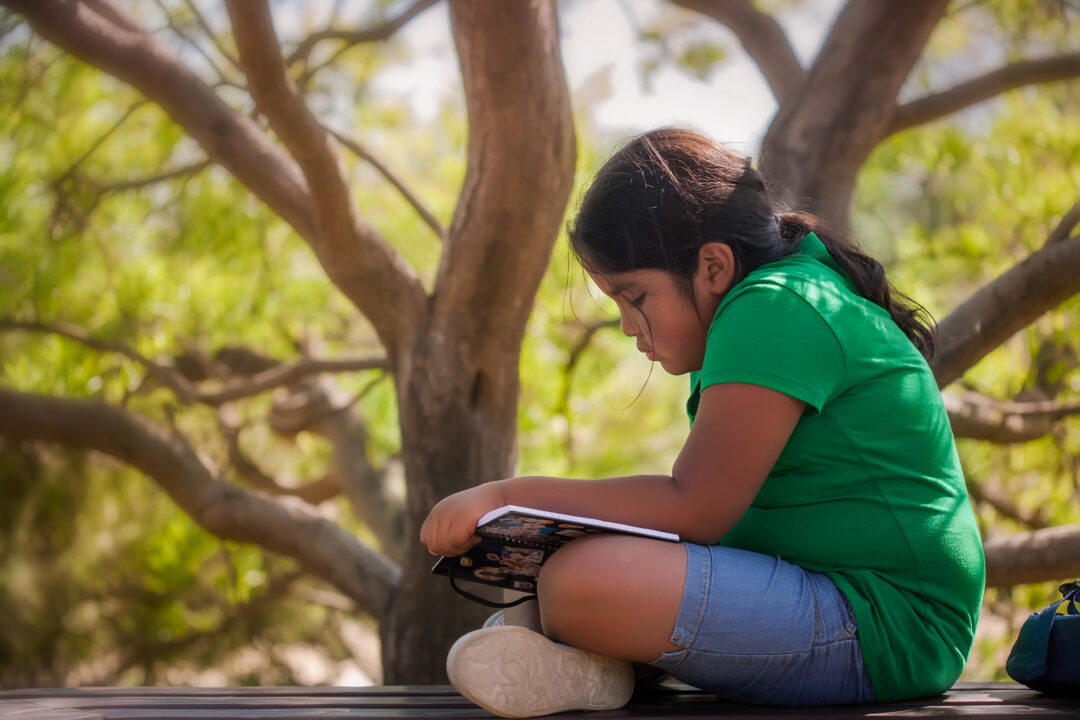
some feelings don’t come in full sentences
they arrive in pieces—
a clenched jaw
a buzzing mind
a quiet that feels too loud
and sometimes the way through
isn’t explanation—
it’s expression
April invites us into National Poetry Month—but poetry, especially for young people, is more than a literacy activity. It’s a regulatory tool. A bridge. A way to move what’s held inside to somewhere safer, softer, and more manageable.
Because when we really step back, whether we’re talking about social-emotional learning, trauma-informed practices, or resilience—we’re all aiming for the same thing:
Helping young people feel safe enough, connected enough, and skilled enough to navigate their inner world… even when it’s hard.
Poetry lives right in the middle of that work.
One Aligned Approach to Supporting the Whole Child
When a student is overwhelmed, shut down, or reactive, it’s easy to think in terms of strategies or frameworks. But underneath it all, the need is deeply human:
- Help me understand what I’m feeling.
- Help me manage what feels too big.
- Help me feel like I belong here.
- Help me find my voice
This is where the alignment becomes clear.
What we often name as self-awareness is also a young person discovering their identity and voice.
What we call self-management is their growing ability to regulate and feel capable.
What we build through relationships and social awareness is a deep sense of belonging.
And when students are given space to express and reflect, they step into independence and contribution—knowing their voice matters and can impact others.
At the same time, a trauma-informed lens reminds us:
None of this happens without safety, choice, and trust.
These aren’t separate initiatives.
They are different languages describing the same goal:
Supporting regulation, connection, and resilience in ways that honor the whole child.
Where Poetry Fits
Poetry meets students exactly where they are—especially when traditional language falls short.
Because in moments of stress, the brain doesn’t always organize thoughts into neat sentences. Words can feel inaccessible. Conversations can feel overwhelming.
Poetry softens the entry point.
It allows:
- a single word instead of a full explanation
- an image instead of a direct disclosure
- rhythm instead of pressure
A student doesn’t have to say, “I feel overwhelmed and anxious.”
They can write:
“My thoughts are loud like thunder I can’t turn off.”
That shift matters.
It creates just enough distance to feel safe—while still allowing expression. And that expression is what begins to regulate the nervous system.
Expression as Regulation
When students write, they are not just creating—they are processing.
They are:
- naming internal experiences (building awareness)
- releasing emotional energy (supporting regulation)
- organizing thoughts (creating coherence)
- making meaning (building resilience)
And when that expression is witnessed—by a peer, a teacher, a caregiver—it reinforces something even deeper:
I am seen. I belong. My voice matters.
That is the intersection of skill-building, identity development, and relational safety—all at once.
A Practice Rooted in Safety and Choice
For poetry to truly serve as a regulator, it must feel safe.
This means:
- offering choice (write, draw, speak, or keep it private)
- removing pressure (no “right way” to do it)
- avoiding forced sharing
- honoring all forms of expression
This is how we stay aligned with a trauma-informed approach—where voice is invited, not demanded.
And it’s also how we build genuine independence:
students choosing how and when to express what’s inside them.
What This Can Look Like
This doesn’t need to be complicated to be powerful.
In classrooms, youth programs, or at home, it might look like:
- a simple prompt: “Today I feel like…”
- describing emotions through imagery: “My mood is the weather today…”
- 2–3 minutes of quiet writing to start or end the day
- optional sharing, or simply being witnessed without commentary
Over time, these small moments build something much bigger:
Students who can pause.
Students who can name what’s happening inside them.
Students who have somewhere to put their feelings—without acting them out.
Why It Matters
When we integrate our approaches—rather than silo them—we create environments where young people don’t just learn skills…
They experience themselves differently.
They begin to feel:
- more connected
- more capable
- more understood
- more in control of their responses
Poetry becomes one of the quiet tools that helps make that possible.
Not because it solves everything—
but because it creates space.
Space to feel.
Space to process.
Space to begin again.
you don’t need perfect words
just a place to put what you’re carrying
and sometimes—
that place
is a poem

