Sometimes the most important moments in education are the ones we never planned.
It was 8:17 on a Tuesday morning.
The classroom was already buzzing. Backpacks dropped. Chairs scraped. Someone couldn’t find their pencil. Someone else had a story that absolutely could not wait until the morning meeting.
And near the doorway stood a student who hadn’t quite made it inside.
His teacher noticed.
She could have called across the room. Reminded him to unpack. Pointed to the morning routine posted on the board.
Instead, she walked over.
“Hey. I’m glad you’re here.”
Four words. A warm smile. Nothing extraordinary.
At least, not from where she stood.
What she couldn’t see was the morning he’d already had. The argument at home. The rushed goodbye. The worry he’d carried through the school doors.
She didn’t know that those four words were the first kind ones he’d heard all morning.
And she might never know.
The Brain Behind the Behavior
Every student enters school with a story. And every experience they carry has the potential to influence how their brain responds to the world around them.
When a child experiences stress, the brain’s threat-detection systems help prepare the body to respond. Heart rate may increase, muscles may tense, and attention can shift toward identifying potential danger.
This is a natural, protective response. But for children who have experienced trauma or prolonged adversity, these stress responses may become more easily activated, even in environments that appear safe to the adults around them.
A raised voice, an unexpected change in routine, or a difficult interaction with a peer may trigger a response that seems disproportionate to the situation.
And when the brain is focused on detecting and responding to a perceived threat, it can become harder to access the very skills we expect students to use throughout the school day.
Attention. Working memory. Emotional regulation. Flexible thinking. Problem-solving.
These abilities rely in part on networks involving the prefrontal cortex, which can become less effective during periods of heightened stress.
The student who appears distracted may be struggling to concentrate. The child who reacts defensively may be experiencing a heightened stress response. The student who shuts down may be overwhelmed rather than unwilling.
Of course, behavior alone cannot tell us whether a child has experienced trauma. But understanding how stress influences the developing brain invites us to approach challenging moments with greater curiosity.
Sometimes, what looks like a learning problem is a brain working hard to feel safe enough to learn.
Why Connection Changes the Experience
The encouraging part of this story is that the developing brain is also remarkably adaptable.
Through neuroplasticity, the brain continues to strengthen and reorganize connections in response to experience. And supportive, predictable relationships can help buffer the effects of stress while providing opportunities to develop healthier patterns of regulation and connection.
This is why a familiar greeting, a calm voice, or a predictable classroom routine can matter more than we realize.
A caring adult cannot erase a child’s difficult experiences. But through repeated interactions that communicate safety, consistency, and acceptance, that caring adult can help create conditions that support regulation and learning.
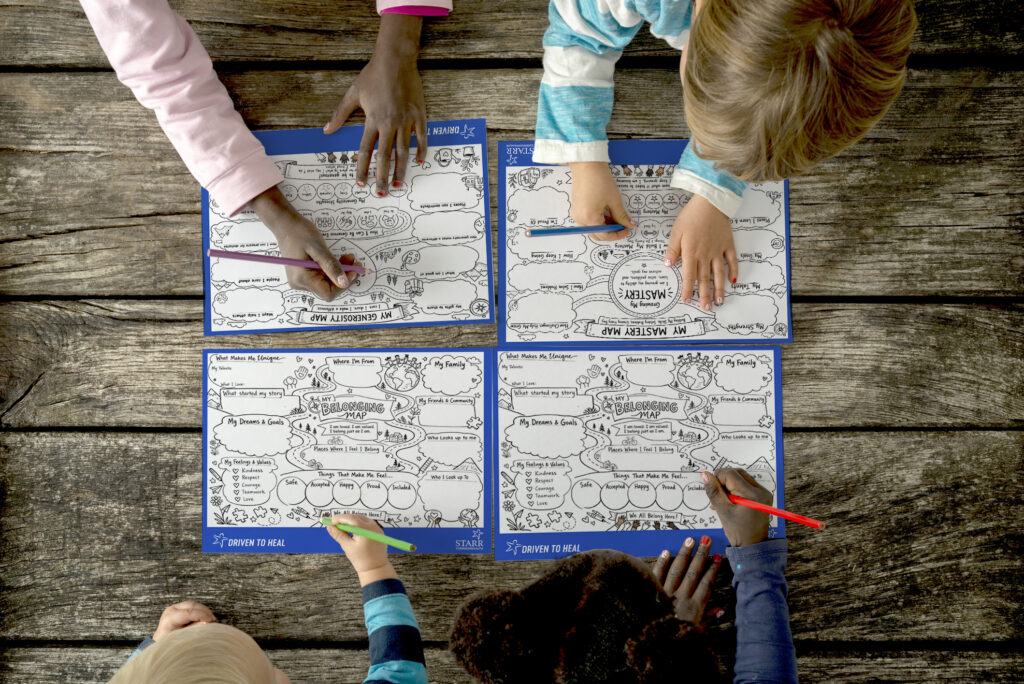
At Starr Commonwealth, the Circle of Courage recognizes Belonging as one of four universal growth needs, alongside Mastery, Independence, and Generosity.
Belonging is more than being included on a class roster or having a seat at a desk. It is the experience of being known, welcomed, and valued. And for a student whose nervous system has learned to anticipate uncertainty, consistent experiences of connection can be especially meaningful.
A teacher who responds calmly when emotions run high.
An adult who offers a moment to regroup before returning to a task.
A familiar face who notices when something feels different.
These interactions are not simply acts of kindness. They are opportunities to support the conditions in which the brain can become more available for learning.
The Invisible Work of Education
Ask an educator what they accomplished today, and you’ll likely hear about the lessons taught, assignments completed, assessments administered, or the growing list of things still waiting for tomorrow.
Rarely do we hear about the student who finally raised their hand.
The child who took a deep breath instead of walking out.
The quiet invitation to join a group.
Yet these moments can represent meaningful progress.
A student who feels more regulated may be better able to participate in a lesson, be more willing to ask for help, or begin taking the small risks that learning requires.
And these changes often happen gradually.
They grow through predictable routines, supportive relationships, explicit teaching of emotional regulation skills, and opportunities to practice those skills with patient adult guidance.
This is an important distinction: connection alone does not teach every skill a student needs. But connection can create the conditions in which teaching becomes more effective.
We can model calming strategies, name emotions, practice problem-solving, and help students recognize what their bodies feel like when stress begins to rise.
Over time, these experiences offer students more tools for navigating difficult moments with growing independence.
The Moments We May Never See
Here’s something worth remembering on the days when the work feels especially heavy.
You may never know which moment mattered most.
You might not see the confidence growing in the student you encourage each morning. You may never hear about the conversation a child has at home because you helped them find the words. You might not realize that the extra minute you spent listening changed the way a student felt about coming to school.
And that’s part of what makes this work so remarkable.
So much of education is an investment in something we cannot immediately see.
We build trust before we see participation.
We practice regulation before we see independence.
We nurture belonging before we see confidence.
And slowly, through repeated experiences of safety, connection, and learning, new possibilities begin to emerge.
Tomorrow Morning
Tomorrow, the classroom will be buzzing again.
There will be lessons to teach, questions to answer, transitions to manage, and more to accomplish than the hours seem to allow.
And somewhere in the middle of it all, there will be another moment.
A student lingering at the door.
A child looking for reassurance.
An opportunity to choose connection.
You won’t find it written in the lesson plan.
But that doesn’t make it any less important.
Because while we may not always see what a student is carrying into the classroom, we can be intentional about what they experience once they arrive.
A sense of safety. A steady relationship. An opportunity to practice a new skill. The reassurance that someone believes in their ability to grow.
Sometimes, the most important thing we teach a child isn’t found in the curriculum. It’s the experience of being safe enough to learn, connected enough to try, and supported enough to keep growing.
Download our FREE Circle of Courage Maps, a great resource for building connection, trust, and resilience.